Geographical Context: Slovenia's Compact Coastal Frontier
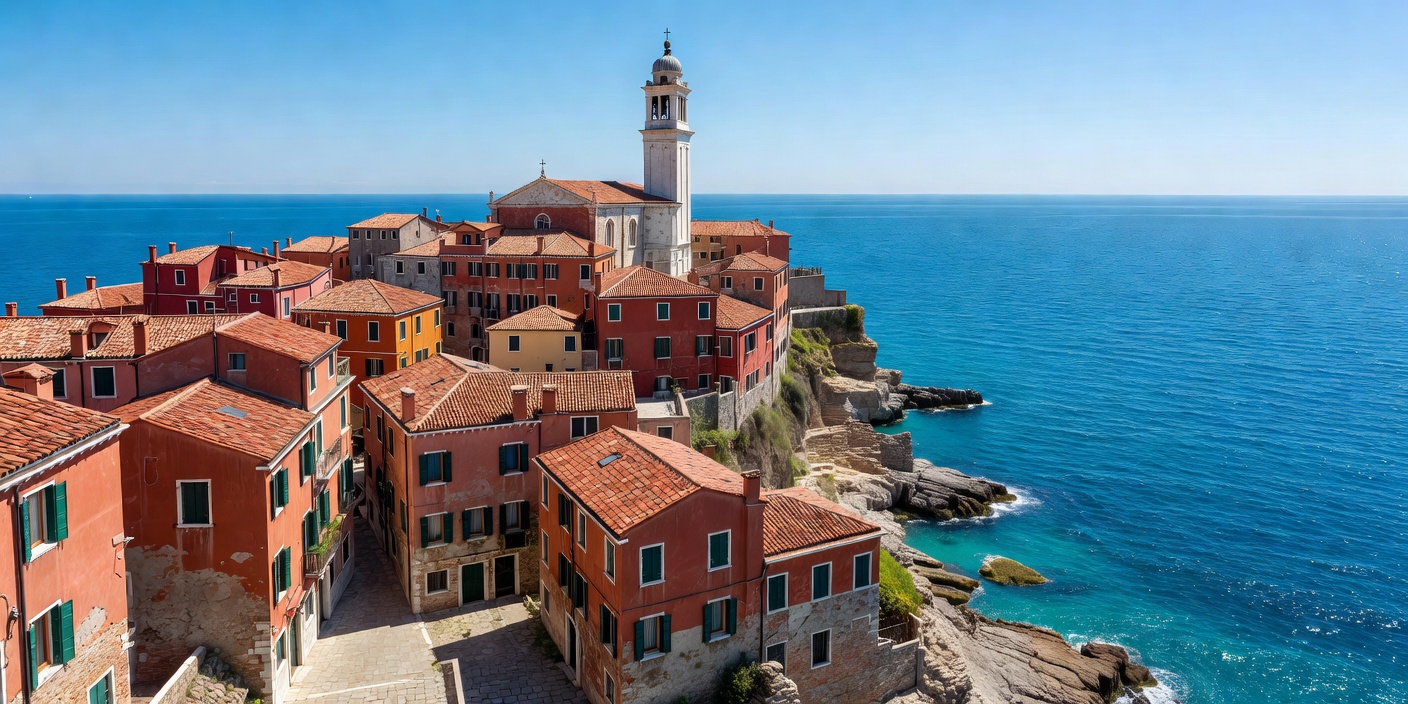
Measuring just 46.6 kilometers, the Slovenian Riviera encompasses a strategically vital coastal corridor along the northern tip of the Istrian Peninsula on the Adriatic Sea. Positioned between Italy’s Gulf of Trieste to the north and Croatia’s Savudrija peninsula to the south, this short coastline packs remarkable cultural and natural diversity. Protected by Mediterranean microclimates, the region replaces alpine spruce and cold river torrents with olive groves, persimmon orchards, Malvazija vineyards, and Venetian bell towers.
Piran (Pirano in Italian) represents the cultural high point of this coastline. The historic town occupies a narrow peninsula projecting into the Adriatic. Its dense, medieval urban fabric features labyrinthine cobblestone alleys designed to disperse coastal wind gusts (the Bora and Jugo) while keeping interior residential corridors cool throughout warm Mediterranean summers.
Venetian Gothic Legacy: Tartini Square & St. George's Tower
Piran operated under the direct maritime rule of the Most Serene Republic of Venice for over five centuries (1283 to 1797). Venetian authority left an indelible imprint on Piran's architecture, language, and civic layout. The town remains officially bilingual, with Italian and Slovenian sharing equal civic status.
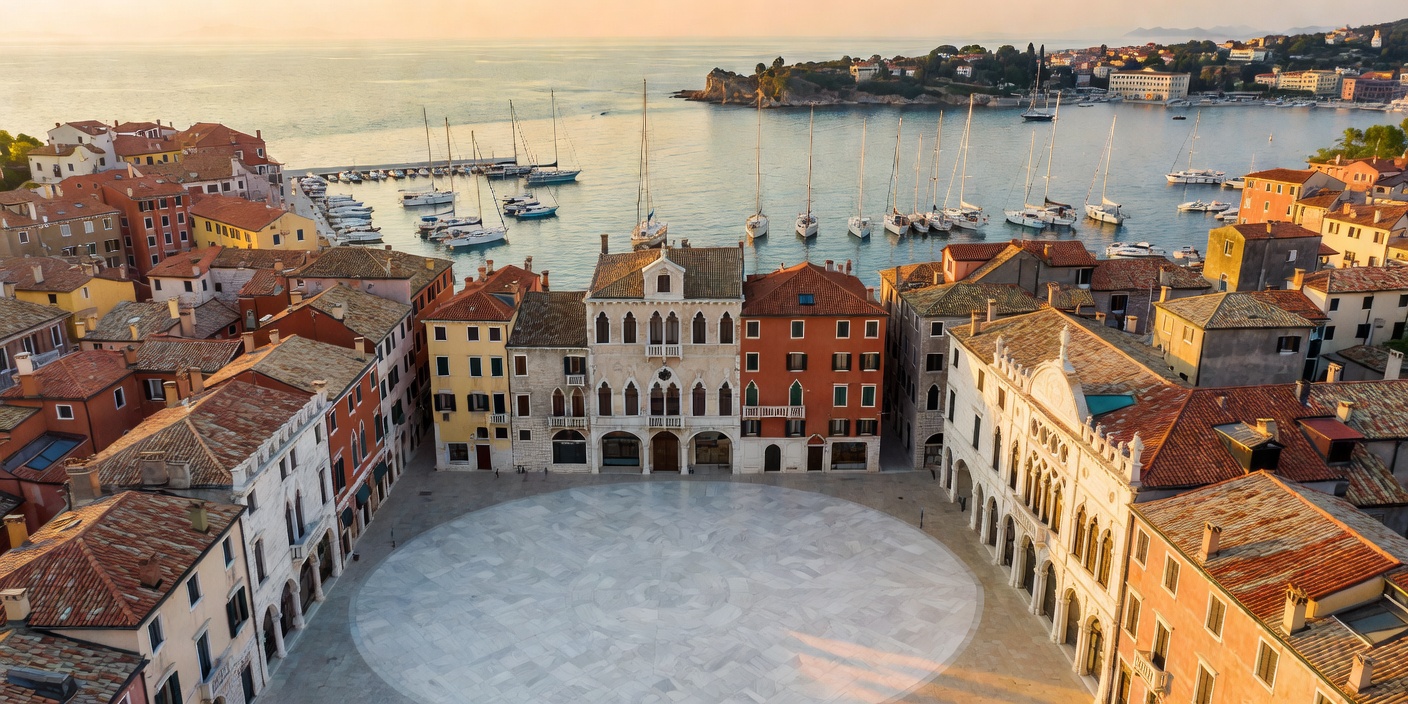
The city's centerpiece is Tartini Square (Tartinijev trg), named after the violin virtuoso and composer Giuseppe Tartini, born here in 1692. Originally a tidal harbor dock for fishing vessels, the inner inlet was filled in 1894 to create an expansive, oval-shaped white marble public forum. Surrounding the square are exceptional architectural works:
- The Venetian House (Benečanka): Built in the mid-15th century, this crimson Venetian Gothic palazzo features delicate tracery windows, a relief stone lion, and the famous inscription "Lasa pur dir" ("Let them talk").
- Municipal Town Hall: Rebuilt in the late 19th century in an imposing neo-Renaissance style, displaying the marble Lion of Saint Mark bearing the open gospel.
- Church of St. George (Cerkev sv. Jurija): Dominating the ridge above the town, its freestanding bell tower was constructed in 1608 as an exact architectural replica (scale 1:2) of the famous St. Mark's Campanile in Venice. Ascending the wooden interior stairs offers a 360-degree panorama encompassing the Slovenian coast, Italy's Grado lagoons, and the Croatian Istrian hills.
The Artisanal Science of Sečovlje Salina Nature Park
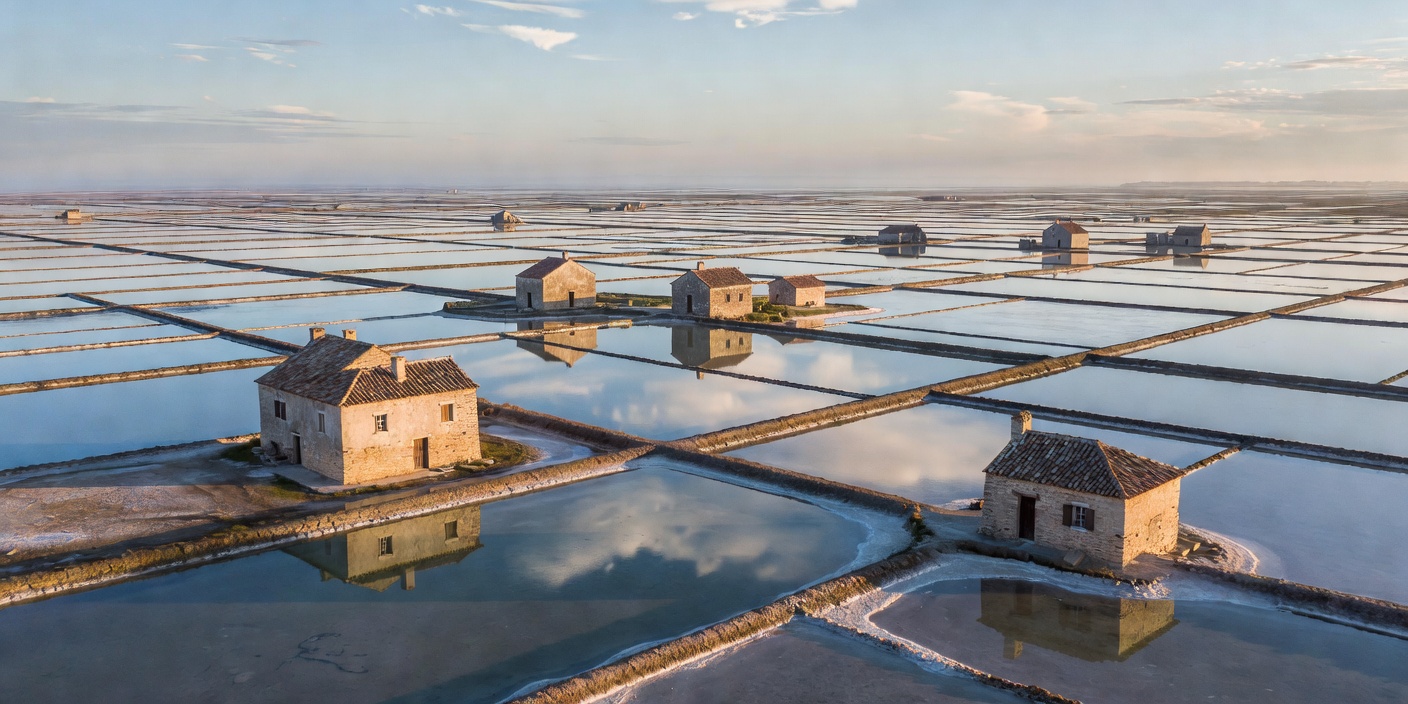
Five kilometers south of Piran along the Dragonja River mouth lies the Sečovlje Salina Nature Park (Krajinski park Sečoveljske soline), where sea salt has been cultivated continuously using the same methods since the 13th century. Covering 650 hectares, these northernmost active salt pans in the Mediterranean continue to produce the coveted cvet soli (fleur de sel).
The Petola Bio-Crust Cultivation Technique
The unique purity of Piran salt is achieved using petola, a 1-to-2 centimeter-thick cultured biological layer composed of gypsum, microalgae, and cyanobacteria. Cultivated on the clay bottoms of evaporation basins, the petola serves as a natural filter, preventing sea salt crystals from mixing with sea bottom mud, resulting in exceptionally white, mineral-balanced sea salt containing high levels of natural magnesium and iodine.
The southern section of the park, Fontanigge, showcases preserved stone salt-workers' cottages and historic sluice gates, functioning as an expansive open-air museum and Ramsar wetland sanctuary for over 270 migratory bird species, including little egrets and flamingo colonies.
Strunjan Nature Reserve: The Moon Bay Flysch Precipice
On the northern slope of the Piran peninsula, the Strunjan Nature Reserve (Krajinski park Strunjan) features the highest flysch cliff wall on the entire Adriatic coastline. Soaring 80 meters vertically above the sea, the Strunjan cliffs are composed of alternating layers of soft sandstone, marl, and shale deposited during the Eocene epoch.
Below the cliff face lies Moon Bay (Mesečev zaliv), a pristine crescent-shaped pebble bay accessible only via steep coastal trails descending from the holy pilgrimage Church of the Apparition of the Virgin Mary. The sheltered seabed features rich underwater meadows of Neptune seagrass (Posidonia oceanica), indicating high water purity and supporting cuttlefish, sea bream, and native seahorse populations.
Istrian Gastronomy: Seafood & Indigenous Varietals
Coastal Slovenian gastronomy centers around fresh catches and native regional wines. Traditional konobas and seafood taverns serve wild sea bass (brancin) baked in Piran sea salt crust, buzara-style Adriatic scampi with garlic, white wine, and parsley, and grilled squid drizzled with cold-pressed Istrian olive oil (Istrska belica).
The surrounding hills produce two dominant, distinct grape varietals:
- Malvazija (Malvasia Istriana): An aromatic, mineral-rich white wine with hints of almond, white peach, and Mediterranean herbs, pairing naturally with shellfish and raw fish carpaccio.
- Refošk (Refosco): A deep ruby-red wine featuring high acidity, firm tannins, and dark berry notes, ideally matched with cured Istrian pršut and wild boar truffle pasta.