The Classical Karst: Origin of Geomorphological Terminology
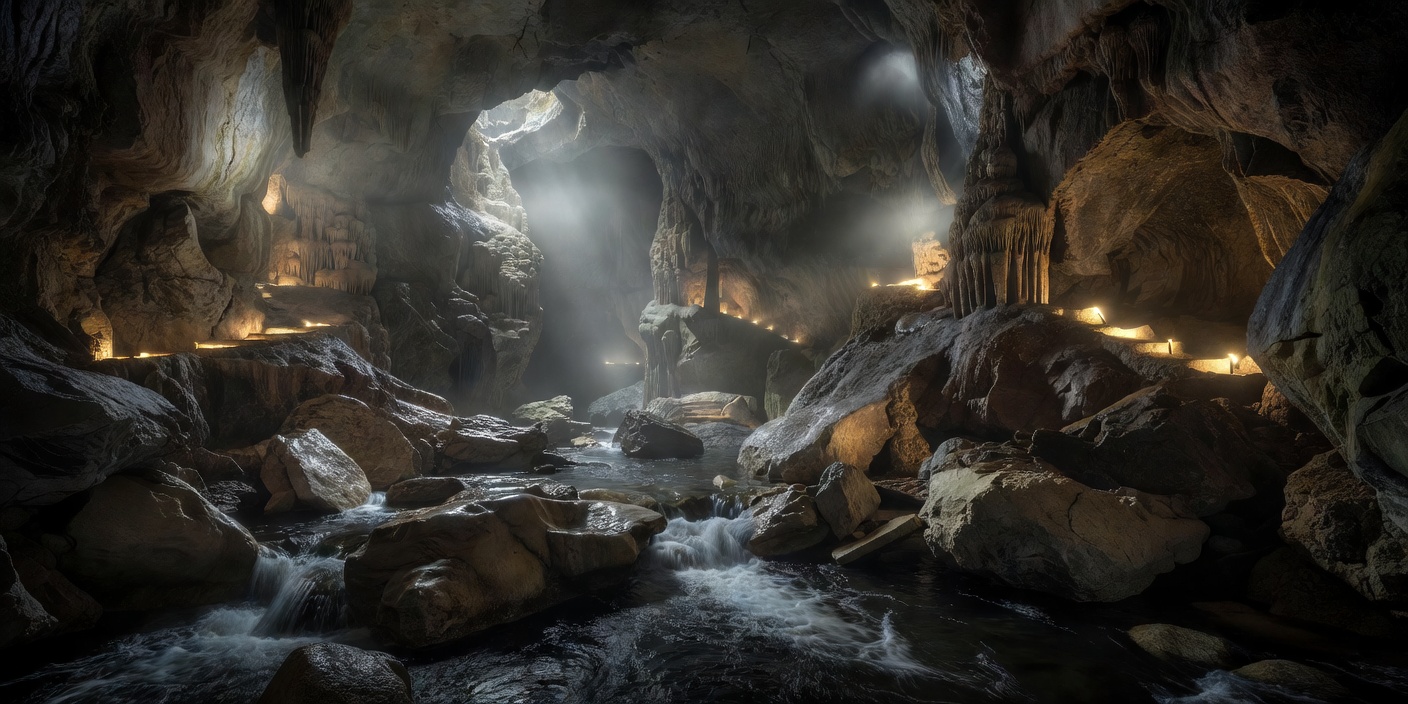
Located in southwestern Slovenia near the Italian border, the Classical Karst (Kras) plateau has loaned its name to global geomorphological science. In this region of soluble Cretaceous and Paleocene limestone, surface water vanishes into fissures, carving vast underground cavern systems, sinkholes (dolines), poljes, and subterranean river channels. The crown jewel of this geological world is the Škocjan Caves Park (Regijski park Škocjanske jame), inscribed into the UNESCO World Heritage register in 1986.
Unlike tourist show caves with paved horizontal paths and electric miniature trains, Škocjan provides a raw, subterranean expedition through one of the largest known underground river canyons in existence. The cave volume exceeds 2.2 million cubic meters, featuring chambers so vast that an entire European cathedral could fit within their vaulted ceilings without touching the limestone rock walls.
The Reka River Sinking Mechanism: Subterranean Dynamics
The hydrological architect of Škocjan is the Reka River. Originating on the southern slopes of Mount Snežnik, the Reka flows on non-porous flysch rock for roughly 50 kilometers before striking the permeable limestone boundary at Škocjan. Here, the river plunges into a sheer ponor (sinkhole) below the village of Škocjan, disappearing completely underground into an untamed labyrinth of chambers and sumps.
The river flows underground for more than 34 kilometers through the Karst bedrock before resurfacing near Monfalcone, Italy, as the Timavo Springs, which drain into the Gulf of Trieste. During torrential autumn cloudbursts, the volume of the subterranean Reka can surge dramatically from 1 cubic meter per second to over 300 cubic meters per second, creating deafening acoustic roar that echoes throughout the entire canyon system.
Hydro-Telemetry & Flood Level Markers
Inside the Martel Chamber (Martelova dvorana)—which measures 308 meters long, 123 meters wide, and 146 meters high—visitors can inspect historic high-water marks etched into the rock walls. During catastrophic historic flood events in 1965, the underground Reka rose over 100 meters above its normal base level, submerging all exploration bridges.
The Cave Traverse: Silent Cave to the Roaring Canyon
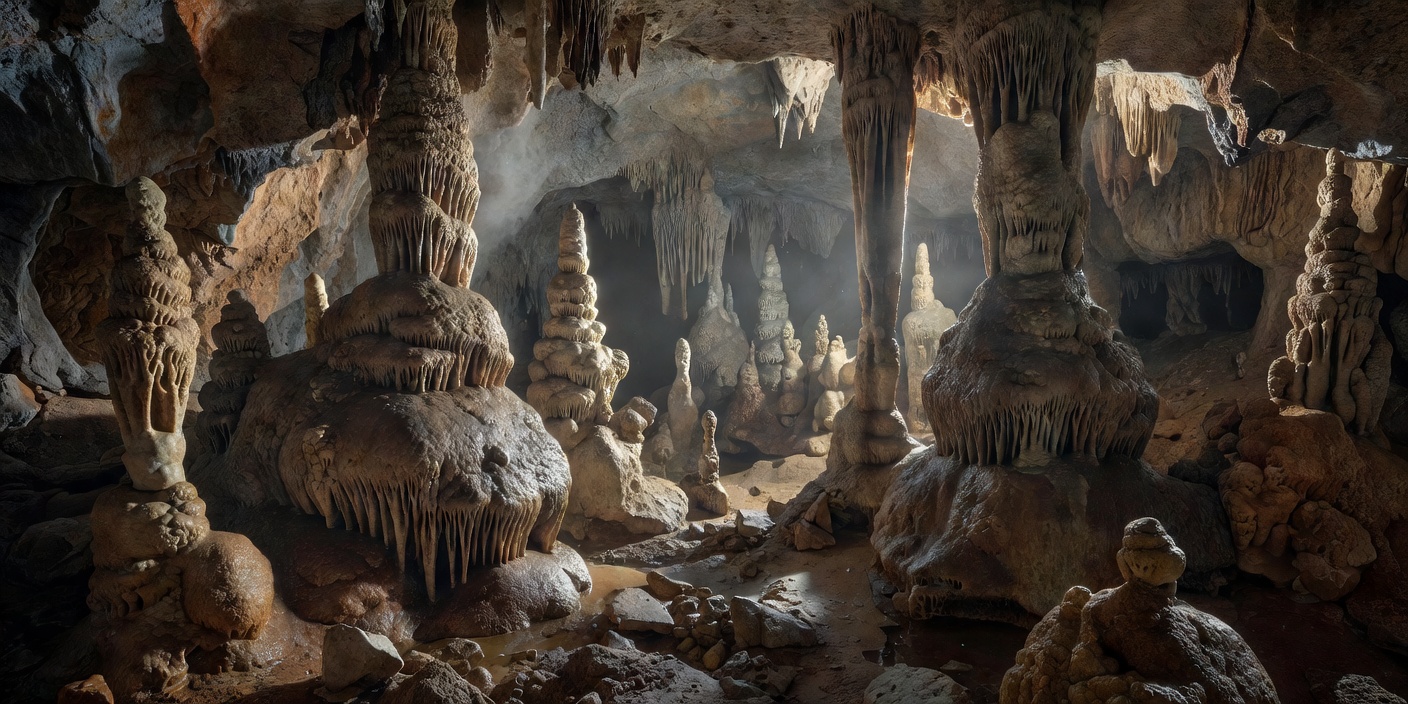
Guided exploration of Škocjan typically commences through an artificial entrance tunnel cutting through the limestone rock into the Silent Cave (Tiha jama). This dry fossil branch of the system is adorned with millennia-old calcite speleothems, giant flowstone curtains, and tiered rimstone dams (gour pools). Highlights include the Great Hall (Velika dvorana), featuring the monumental 15-meter-high stalagmite known as "The Giant" (Orjak).
As visitors proceed deeper into the Whispering Cave (Šumeča jama), the ambient acoustic tone shifts dramatically. The tranquil quiet is replaced by a low frequency, vibrating rumble as the path emerges onto the narrow ledge of the underground canyon. Walking along hand-chiseled rock pathways, visitors peer down into an abyss where the emerald foam of the Reka rushes through sheer vertical gorges illuminated only by subtle recessed guide lights.
The Cerkvenik Bridge: Engineering the Void
The psychological climax of the Škocjan expedition is crossing the Cerkvenik Bridge. Suspended 47 meters directly above the subterranean river bed, this single-span steel footbridge connects the eastern and western canyon walls across the roaring void. Crossing this bridge reveals the immense scale of the earth: beneath your feet, turbulent subterranean waters race through limestone chutes, while limestone cliffs disappear into darkness above.
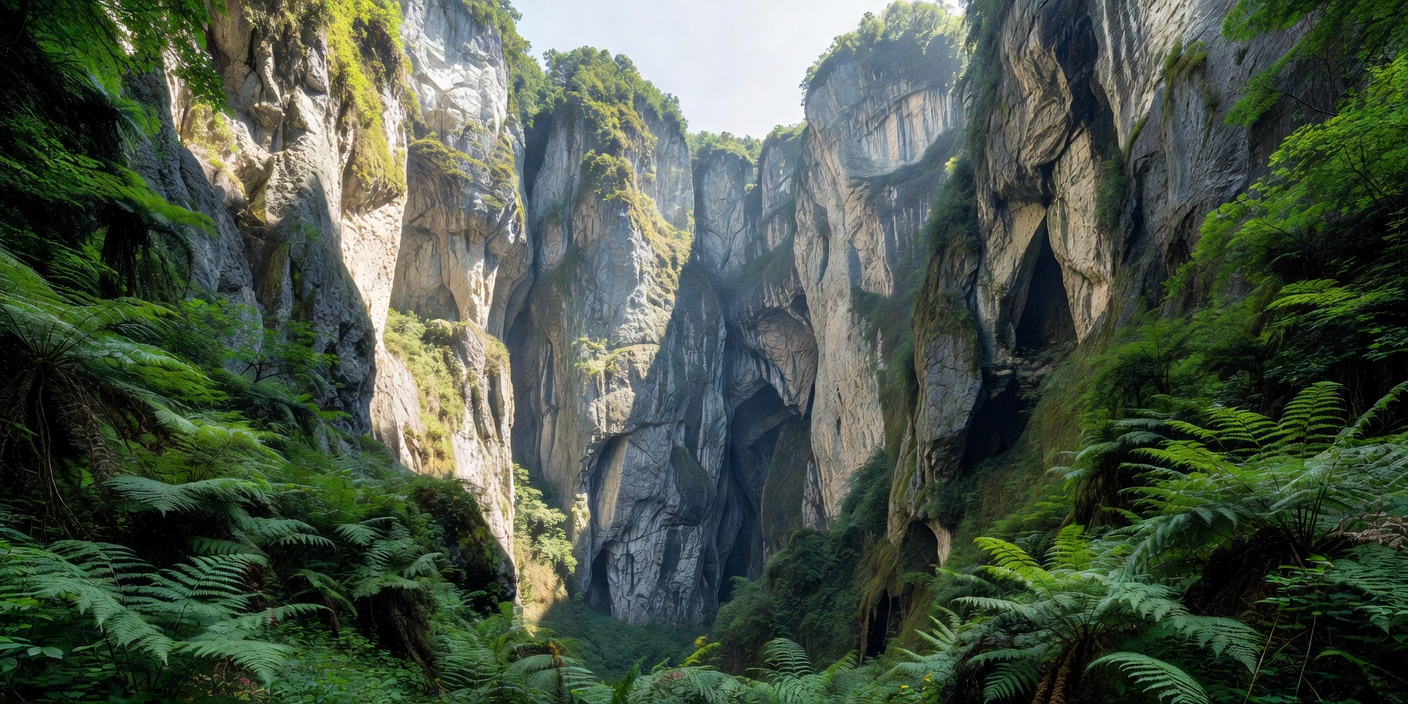
Exiting the underground system brings visitors into the Velika Dolina (Great Doline) and Mala Dolina (Little Doline)—two immense collapse sinkholes over 150 meters deep. Sunlight pours through lush vegetation, maidenhair ferns, and wild ivy clinging to the circular limestone precipices, providing a habitat for rare bird species such as the wallcreeper and the Alpine swift.
Visitor Protocol, Seasonality & Transit Staging
Due to the cave's stable microclimate, the interior temperature remains constant at 12°C throughout the year, with humidity levels exceeding 90%. Warm fleece layering, windproof outer jackets, and sturdy footwear with non-slip rubber tread are mandatory. Photography is prohibited within the active cave chambers to preserve the cavern ecology and maintain steady visitor flow along narrow cliffside ledges.
Škocjan Caves Park is located 75 kilometers southwest of Ljubljana along the A1 motorway. Exit at Divača, where regular shuttle buses transfer rail passengers between the Divača train station and the park visitor center in Matavun. Advanced online booking is strongly advised from June to September to secure entrance slots.